

Monday, April 2, 2018
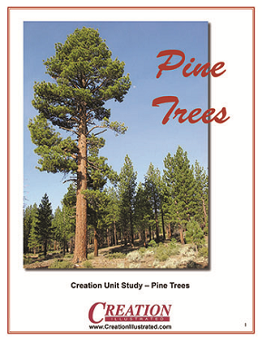
Creation Illustrated - Pine Trees Unit Study (Review)
This is a pretty straight forward, 16 page unit study (including a 3 page answer key), geared towards students grades 5-8, but it could be used with other students as well. The study includes links to reading resources (including a link to Creation Magazine Fall 2017 digital edition) and educational videos. Also covered in the unit study are vocabulary and spelling, Bible study, geography, science and math connections, writing and penmanship, art and a crossword puzzle. While this is a complete unit study, it isn't tedious or boring, nor does it cover every single thing you ever hope to know about pine trees, but it's a great launching point to get you started and give you a firm foundation.
As expected, everything in the unit study is taught from a Biblical, creation based world view. However, for those who may have a different world view, the vocabulary, spelling, geography, pine tree identification, writing, art and search puzzle can be taught without crossing over.
We used this unit study as a supplement to our botany class that I'm teaching at our weekly co-op. We mostly focused on the geography (where different types of pine trees grow), the science study, math and the introduction of Fibonacci numbers in nature and the artwork as we did some nature journaling. Since the unit is a download, I could print off the pages I wanted to use each week and skip the ones that I opted not to use. Our co-op class is only 60 minutes weekly, so I added a segment of this unit study at the end of class for several weeks. I was surprised that only my kids had ever heard of Fibonacci numbers, so it was good to have something totally new to introduce.
You could do the entire study in one day if you like, or draw it out over one or more weeks depending on your student(s) and your time constraints. The videos and reading might be a bit much for younger students to get through all at once. My children, ages 12 and 14, were happy to tag a few extra minutes onto their regularly scheduled school day to knock out a video or two as time allowed. The links and videos were not an option for us during co-op due to lack of Internet at our facility.
Other available unit studies include topics such as badgers, black bears, dragonflies, fragrances, Joshua tree, manatees and snow. We also received the snow unit, and we were able to incorporate that unit a bit into our homeschooling as we had our first major snowfall of the year in late March during the review period. There's a great section on meteorology and the water cycle in this unit, and includes links to the Creation Illustrated Winter 2018 digital edition. Each unit study is currently available for $6.95 and is a quick and easy PDF download, making it available immediately.
Here's a sneak peak at the upcoming Creation Illustrated Spring 2018 edition.
To read other Review Crew opinions on this and other unit studies from Creation Illustrated, click here.
Monday, February 16, 2015
World War 1–Unit Study
In studying history, I try my best to make it relevant to the children in some way. As we began studying World War I, I learned of a local cemetery that has a life size doughboy standing guard over the grave of Pvt. Russell Snyder. This young soldier died October 8, 1918, just weeks short of the end of the war. His parents paid a hefty sum to have a life like statue built, to honor their son. The girls and I made a pilgrimage out to his grave to pay honor to him as well.
Time and the elements haven’t been kind to the statue, as you can see. But Pvt. Snyder still looks proud as he stands guard.
The core of our study came from this World War I workbook from McDonald Publishing. Although it is written for 6-9th grade students, I found that it was easily adaptable for Lindsey.

In addition to the workbook, we added notebooking pages from Jimmie’s Collage – World War I Notebook Pages. These workbook and notebooking pages added a nice section to our history notebooks.
We went on a little excursion to the Spoils of War Museum.
As usual, we did LOTS of reading.
Library Resources:
Assassination in Sarajevo: The Trigger for World War I; Stewart Ross
World War One: An Illustrated History in Colour, 1914-1918; Robert J. Hoare
Super Spies of World War I; Kate Walker
Leaders of World War I; Steward Ross
Bold Leaders of World War I; Red Reeder
Battles of World War I; John Hamilton
Campaigns of World War I; Nick Hunter
The First Book of World War I; Louis Leo Snyder
An Illustrated History of the First World War; John Keegan
The Doughboys: America and the First World War; Gary Mead
American Women in World War I: They Also Served; Lettie Gavin
Those Extraordinary Women of World War I; by Karen Zeinert
When Christmas Comes Again: The World War I Diary of Simone Spencer; by Beth Seidel Levine
Sergeant Stubby: How a Stray Dog and His Best Friend Helped Win World War I and Stole the Heart of a Nation; Ann Bausum
Rags: Hero Dog of WWI: A True Story; Margot Theis Raven
I was horribly disappointed to find that our local library system didn’t have one single book on Sgt. Alvin York. I’ll be picking up a couple of books to add to our own library when I order curriculum this year.
Monday, November 24, 2014
Industrial Revolution Unit Study
Some or our unit studies are more hands on than others. This one fall into the “others” category. We did a great deal of reading about inventors and their inventions that changed our world. We also spend a great deal of time reading about a few of the wealthy families who came out of that time period.
We added onto our history notebooks using the Inventors Notebooking Pages and also used the Inventors and Inventions Unit from Homeschool Share.
Here is our extensive reading list, as a launching point for your study.
Library Resources:
Archimedes: Mathematical Genius of the Ancient World; by Mary Gow
Cyrus McCormick and the Mechanical Reaper; by Lisa J. Aldrich
Alexander Graham Bell; by Victoria Sherrow
The Amazing Life of Benjamin Franklin; by James Cross Giblin
Hoop Genius: How a Desperate Teacher and a Rowdy Gym Class Invented Basketball; by John Coy
The Cotton Gin; by Nancy Robinson Masters
Guglielmo Marconi and Radio; by Steve Parker
Henry Ford; by Jane Shuter
Thomas Edison; by Carol Cramer
Louis Braille; by Beverley Birch
Samuel B. Morse; by Judy Atler
Gutenberg; by Leonard Everett Fisher
Dr. Jenner and the Speckled Monster; by Albert Marrin
The Wright Brothers; by Lola M. Schaefer
James Watt, Master of the Steam Engine; by Anna Sproule
Inventors; by Martin W. Sandler
Inventors Who Changed the World; by Angela Royston
The Industrial Revolution; by Hilarie N. Staton
The Industrial Revolution – From Muscles to Machines; by Carole Marsh
Kids During the Industrial Revolution; by Lisa A. Wroble
The Child Labor Reform Movement; by Steven Otfinoski
The Tycoons – How Andrew Carnegie, John D. Rockefeller, Jay Gould and J.P. Morgan Invented the American Super Economy; by Charles R. Morris
Andrew Carnegie – Captain of Industry; by Dana Meachen Rau
John D. Rockefeller – Oil Baron and Philanthropist; by Rosemary Laughlin
The Life of Nelson D. Rockefeller – World Conquer; by Cary Reich
Tuesday, September 30, 2014
Wild West Unit Study
Our Wild West Unit took a few rabbit trails along the way. At one point, it even morphed into a separate Native American Unit Study.
We studied the artist C.M. Russell and worked on a little western flavored art.
I pulled a lot of online resources from a unit at Ed Helper. Instead of recreating their wheel, I’ll just share their link instead. Check it out here.
We added lots of things to our timeline and history notebooks and read LOTS of books. I hope you find the info I pulled together helpful.
Library Resources:
Wild West; by Stuart Murray
100 Things You Should Know About the Wild West; by Andrew Langley
The Wild West, An Interactive History Adventure; by Allison Lassieur
Life in a Wild West Show; by Stephen Currie
Stagecoaches and Railroads; by Sally Senzell Isaacs
Wild West Days; by David C. King
Annie Oakley; by John Hamilton
Belle Starr; by Carl R. Greene
Buffalo Bill Cody; by Michael Goodman
Wild Bill Hickok, The Man and His Myth; by Joseph G. Rosa
Facts & Fiction: Bandits & Outlaws; by Stewart Ross
Wanted! Frank & Jesse James, The Real Story; by Margaret Baldwin & Pot O’Brien
Butch Cassidy: by John Hamilton
Jesse James; by John Hamilton
Billy the Kid; by John Hamilton
Judge Roy Bean; by Carl R. Green and William R. Sanford
Wyatt Earp; by Rob Staegler
Doc Holliday; by Carl R. Green and William R. Sanford
Kit Carson, Mountain Man; by Tracey Boraas
America’s Premier Gunmakers Remington; by K.D. Kirkland
America’s Premier Gunmakers Winchester; by K.D. Kirkland
America’s Premier Gunmakers Colt; by K.D. Kirkland
Thursday, September 25, 2014
Native American Unit Study
We started off on a Wild West Unit study, which quickly took a rabbit trail into a Native American Unit Study. That’s the beauty of homeschooling, right?
We learned about different tribes, their housing, food and famous chiefs. We also read about the Trail of Tears, The Long Walk and Wounded Knee. My girls are officially boo-ing the Calvary after all of that.
The girls and I learned about various weapons of the different tribes. We then set out to make what I considered one of the safer Native American weapons, the sling shot. I guess if you look at it from Goliath’s standpoint you know this is not the case, as I learned later as well, ahem.
While studying the Nez Perce and their equestrian skills, we made appaloosa decorations, and Lindsey promptly placed it on her trusty steed.
While studying the Navajo, we delved into a little faux turquoise and silver jewelry. The “beads” are macaroni noodles. To color the uncooked noodles, put 2-3 tablespoons of rubbing alcohol in a zip lock back, then add several drops of food coloring and mix well. Dump in your desired amount of macaroni and move it around in the bag quickly. Place in a single layer on a cookie sheet to dry (and to lose the alcohol smell.) String the macaroni on heavy twine or yarn to make your necklace.
For the faux silver, take a piece of tinfoil, and wrap it around a piece of cardstock. Make sure the shiny side goes towards the cardboard. Tape the tinfoil onto the back of the cardboard. Draw a design onto a white piece of paper, then overlay the paper onto the tinfoil. Trace back over the design, pushing hard enough to transfer the pattern onto the tinfoil below.
We also revisited our Moccasin Making skills.
Finally, we finished off our study with some fry bread. This was a staple food for some Native American groups, and for my family when I was a child too. The girls enjoyed theirs with honey.
Books & Resources:
The Cherokee Nation and the Trail of Tears; by Theda Perdue and Michael D. Green
The Trail of Tears; by Peter Benoit
Wounded Knee: The Death of a Dream; by Laurie O’Neil
The Battle of Little Bighorn; by Micael V. Uschan
The Cherokee; by Cathryn J. Long
Saga of the Sioux; by Dwight Jon Zimmerman
The Apache; by Anne Ake
The Sioux; by Michelle Levine
The Navajos; by Liz Sonneborn
The Arapaho: Hunters of the Great Plains; by Karen Bush Gibson
The Shoshone; by Sarah De Capua
The Iroquois; by Charlotte Wilcox
The Greatest Indian Chiefs; by Jean Marcellin
Sitting Bull; by Herman J. Viola
A Boy Called Slow; by Joseph Bruchac
Chief Joseph and the Nez Perce; by Bill & Jan Moeller
Chief Crazy Horse – Following a Vision; by Larry Dane Brimner
Geronimo; by William Thompson
The Indian Wars; by Carol Behrman
Native American History Pockets; by Evan-Moore
American Indians Fandex; by Workman Publishing
Thursday, May 8, 2014
Civil War Unit Study
There were three main causes of the War, slavery, economics and state rights. Much of history focuses on the topic of slavery, but very little on economics and state rights. Our reading list (at the bottom of this post) shows the time spent on understanding slavery and it’s affects on both the north and south.
We spent a total of 8 weeks on this topic. Our location avails us to many opportunities for field trips and local historical sites. Even though we have officially ended our unit study, we do still have several more field trips and a Civil War Summer Camp in the pipeline.
Hands On Activities:
In addition to our extensive reading list (at the bottom of this post) we also did a few hands on activities. The favorite by far was our salt dough map of the Shenandoah Valley Campaign.
I also combined several online free lapbooks and created one large lapbook to go with out unit. The two resources I used are linked below.
War Between the States Lapbook, from Tina’s Dynamic Homeschool
Civil War Lapbook, from Homeschool Share
Field Trips:
We were able to go on various field trips, and this was by far the best element to this particular unit study. I’ve posted about each field trip we’ve taken (I’ll be updating with more links). Be sure to check them out in the links below.
Virginia Museum of the Civil War – Field Trip
Civil War & Emancipation Day – Field Trip
The Bread Basket of the Confederacy – Field Trip
Visiting Stonewall Jackson – Field Trip
Library Resources:
The Dred Scott Decision; by Brendan January
Harriet Tubman, Freedom Bound; by Janet & Geoff Benge
Journey to Freedom, Harriet Ross Tubman; by Don Troy
Escape North, The Story of Harriet Tubman; by Monica Kulling
Get On Board, The Story of the Underground Railroad; by Jim Haskins
Eliza’s Freedom Road, An Underground Railroad Diary; by Jerdine Nolen
Secret Signs, An Escape Through the Underground Railroad; by Anita Riggio
The Underground Railroad for Kids; by Mary Kay Carson
Civil War Weapons: by C.B. Colby
Great Map of the Civil War; by William J. Miller
Civil War Battle Atlas; by Time Life Books
The Civil War, Fort Sumter to Gettysburg; by William C. Davis and Bell I. Wiley
The Battle of First Bull Run; by Larry Hama
The Battle of Gettysburg; by Gina DeAngelis
Gettysburg; by Ruth Ashby
Antietam; by Christopher Hughes
Shiloh; by Richard Steins
Fort Sumter; by Brendan January
Chancellorsville to Appomattox; by Corinne J. Naden & Rose Blue
1862 Fredericksburg, A New Look at a Bitter Civil War Battle; by K.M. Kostyal
General George Armstrong Custer and the Shenandoah Valley Campaign; by Adolfo Ovies
American Kids in History, Civil War Days; by David C. King
A House Divided, The Lives of Ulysses S. Grant and Robert E. Lee, by Jules Archer
Stonewall Jackson; by Don McLeese
Ulysses S. Grant; by Don McLeese
George McClellan; by Brent Kelley
Jefferson Davis; by Cory Gideon Gunderson
Confederate Commander, General Robert E. Lee; by Sue Vander Hook
Jeb Stuart; by Don McLeese
Abraham Lincoln; by Mike Venezia
Abe Lincoln Remembers; by Ann Turner
The Gettysburg Address; by Abraham Lincoln
Just a Few Words Mr. Lincoln; by Jean Fritz
Across Five Aprils; by Irene Hunt
Thursday, March 6, 2014
Westward Expansion Unit Study
This 6 week unit study takes us from the end of the American Revolution, to the late 1800’s (We skipped the Civil War, because we’ll be doing a 6 week study of that war starting in March.) We’ve covered The Lewis & Clark Expedition,the War of 1812, the first 15 U.S. Presidents, the Homestead Act, the Oregona Trail, the Alamo and lots of other interesting pieces of history, including a Mississippi River Mini Unit. As always, we have an extensive library reading list at the bottom of my post. However, this time I also have some wonderful, free online resources for you to use and enjoy.
Lewis & Clark Lapbook, from Tina’s Dynamic Homeschool.
Fauna of the West, from Tina’s Dynamic Homeschool.
Flora of the West, from Tina’s Dynamic Homeschool
On the Trail Cuisine; from Home Baking Association
Oregon Trail Lapbook, from Tina’s Dynamic Homeschool
Oregon Trail Lapbook, from Lapbook Lessons
Westward Expansion Coloring Pages, from USA Printables
Below are a few of the activities we have worked on in this unit.
Lewis & Clark lapbooks.
We made some pretty awesome moccasins. I included a tutorial in my post Making Moccasins.
We used these American Animals Flashcards ($1 bin at Target) to study some of the new animals Lewis & Clark met on their journey.
We worked on a mini-unit on the Mississippi River and learned about the ecosystems, water cycle and traveling by waterway.
We studied the Alamo during the time of the siege and over throw. (February 23-March 6).
We made Oregon Trail lapbooks, and watched the movie “Seven Alone”.
No westward expansion study would be complete without covered wagons. I had 4 kits, planning to let each child make 2 wagons. Interesting enough all the kits were missing parts, so by the time we were finished we had enough for 2 complete wagons (glad I bought extra).
Have you ever seen the movie “Paint Your Wagon”?…neither has Olivia, but maybe it would have caused a more realistic looking wagon. My husband assures me that the Indians wouldn’t attack such a colorful wagon, they’d think it was bad medicine. I say it’s a sitting duck on the open prairie.
The Lego people, and their belongs are all loaded up and ready for the 6 month trip west. The lack of oxen to pull the wagons may slow down progress a bit.
Library Resources:
Lewis & Clark The Journey of the Corps of Discovery; DVD by PBS Home Video
Lewis & Clark Great Journey West; DVD by National Geographic
Sacagawea, Heroine of the Lewis & Clark Journey; DVD by Questar, Inc..
Lewis and Clark American Explorers; by Arlene Bourgeois Molzahn
Lewis and Clark, In Their Own Words; by George Sullivan
The Lewis and Clark Journals; by E.J. Carter
The Lewis & Clark Expedition; by Carol A. Johmann
The Lewis and Clark Expedition 1804-1806; by Dan Lacy
Lewis and Clark and the Route to the Pacific; by Seamus Cavan
Lewis and Clark for Kids; by Janis Herbert
Lewis and Clark Explore the Northwest; by Clint Twist
The Lewis and Clark Trail, Then and Now; by Dorothy Hinshaw Patent
Sacajawea, Shoshone Trailblazer; by Diane Shaughnessy
Who Was Sacagawea?; by Judith Bloom Fradin
Sacajawea; by Joseph Bruchac
Sacajawea Wilderness Guide; by Kate Jassem
Daniel Boone, Frontiersman; by Janet & Geoff Benge
Daniel Boone; by Laurie Lawlor
Tall Tales & Legends, Davey Crockett; DVD by Shelley Duvall
Davy Crockett, A Life on the Frontier; by Stephen Krensky
Davy Crockett, Hero of the Wild Frontier; by Elizabeth R. Moseley
Davy Crockett, Defender of the Alamo; by William R. Sandord and Carl R. Green
The War of 1812; by Rebecca Stefoff
A Timeline of the War of 1812; by Sandra Giddens
The Star Spangled Banner Pop Up Book; by Calvert Gamwell
Pony Express Riders of the Wild West; by Jeff Savage
The Pony Express; by Elaine Landau
The Alamo; DVD (John Wayne version)
The Alamo; by Tamara L. Britton
The Alamo; by Tim McNeese
The Homestead Act; by Elaine Landau
Pioneers; by Dennis Fradin
The Pioneers Go West; by George R. Stewart
Pioneers, A Library of Congress Book; by Martin Sandler
Covered Wagons, Bumpy Trails; by Verla Kay
Wagon Trains and Settlers; by Ellen H. Todras
The Oregon Trail; by Jean Blashfield
The Oregon Trail; by Mel Fried
The Oregon Trail; by Steven P. Olson
Children of the Trail West; by Holly Littlefield
Apples to Oregon; by Deborah Hopkins
Across the Wide and Lonesome Prairie, The Oregon Trail Diary of Hattie Campbell; by Kristiana Gregory
Thursday, February 13, 2014
Mississippi River Mini-Unit
We’re currently in the middle of our Westward Expansion unit study. Since getting to the west meant crossing the Mississippi, I thought this would be a great time to do a mini-unit on the Mississippi River.
We studied the pathway and history of the Mississippi using the book Minn of the Mississippi as our guide. (FYI, there is some evolution in the book, so you may need to skip some sections.) Since Minn was a snapper turtle, we added turtles to our mini unit, learning about their life cycle and diet. Isn’t this turtle puppet just too cute?
During our map work, we learned about geographical/river terms such as bayou, meander, levee, confurence and delta. The girls labeled each of the states touched by the Mississippi, and also major rivers and tributaries.
We studied the water cycle using these cute printables from Kidzone.
We created steam with our tea kettle, then held a frozen piece of plastic over the kettle to create condensation, and of course we used the 16 inches of snow that fell overnight to explain precipitation, grins.
Books we used:
Minn of the Mississippi; by Holling Clancy Holling
A Place for Turtles; by Melissa Stewart
Geography Fact Files, Rivers; by Many Ross
Land Shapes, Rivers: by Brian Knapp
Mississippi River, A Journey Down the Father of Waters; by Peter Lourie
Down a River; by Carole Telford
Mississippi; by Diane Siebert
The Mississippi America’s Mighty River; by Robin Johnson
The Mississippi River; by Allan Fowler
Exploring the Mississippi River Valley; by Rose Blue and Corinne J. Naden
The Mighty Mississippi, The Life and Times of America’s Greatest River; by Linda Vieira
Huckleberry Finn; by Mark Twain
Thursday, January 16, 2014
Revolutionary War Unit Study
We’ve just finished up a 6 week unit on the American Revolution. This has been one of my favorite studies. I broke it up into three sections, famous women, famous men and famous places/events of the war. The last week of our study we looked at the Declaration of Independence, the Constitution and the three branches of government more in depth. We added a LOT of pages to our history notebooks during this unit study.
I found a really helpful website called Patriotic Coloring Pages . I printed off sheets on the Liberty Bell, Valley Forge, Paul Revere’s Ride and the Thirteen Colonies Map (to name just a few) to add to the girls history notebooks. They like to color while we do read alouds and this helps keep them focused on what we’re reading.
Homeschool Share has a wealth of resources, and we incorporated many of those into our unit, including:
American Revolution Time Line
Men of American Revolution Notebook Pages
Women of American Revolution Notebook Pages
Places and Events of the American Revolution
American Revolution Game Kit
As with all of our unit studies, we did a LOT of reading. I’ve included a very comprehensive list of resources for you.
Library Resources: Famous Places & Events of the Revolution
Liberty Kids, Valley Forge; DVD by Reader’s Digest
American History for Children; DVD by Schlessinger Media
The Battle of Lexington & Concord; by Scott P. Waldman
Paul Revere’s Ride; by Henry Wadsworth Longfellow
Crossing the Delaware; by Louise Peacock
The Stamp Act of 1765; by Michael Burgan
The Battle of Bunker Hill; by Scott Ingram
Valley Forge; by Michael Burgan
The Boston Tea Party; by Kevin Cunningham
The Boston Massacre; by Peter Benoit
The Battle of Yorktown; by Dee Ready
Independence Hall; by Sandra Steen and Susan Steen
The Thirteen Colonies; by Brendan January
Library Resources: Famous Women of the Revolution
Bring Us Water, Molly Pitcher!; by Michael Dahl
Molly Pitcher; by Christy DeVillier
Betsy Ross; by Jane Duden
The Flag Maker; by Susan Campbell Bartoletti
Those Remarkable Women of the American Revolution; by Karen Zeinert
Women of the American Revolution; by Louise Chipley Slavieck
Great Women of the American Revolution; by Michael Burgan
Independent Dames; by Laurie Halse Anderson
Library Resources: Famous Men of the Revolution
John Adams; by Anne Welsbacher
The American Revolution for Students; DVD by Schlessinger Media
One Nation Under God; DVD from Learn Our History
America’s War of Independence 1763-1783; by David Rubel
The American Revolution, How We Fought the War of Independence; by Edward F. Dolan
The Light and the Glory for Children; by Peter Marshal & David Manuel
Little Hands Celebrate America; by Jill Frankel Hauser
Samuel Adams, Son of Liberty, Father of Revolution; by Benjamin H. Irvin
Revolutionary War Heroes, Ethan Allen; by Virginia Aronson
Benedict Arnold; by Susan R. Gregson
Revolutionary War Leaders, John Burgoyne; by Daniel E. Harmon
Charles Cornwallis; by Lewis K. Parker
American Patriot, Benjamin Franklin; by Michael Burgan
Benjamin Franklin, A Man of Many Talents; by Kathryn Hoffman Satterfield
Revolutionary War Leaders, John Hancock; by Ann Graham Gaines
Profiles of the Presidents, Andrew Jackson; by Barbara Somervill
Nathan Hale, Revolutionary Spy; by Nathan Olson
Where Was Patrick Henry on the 29th of May?; by Jean Fritz
Revolutionary War Leaders, Thomas Paine; by Bruce and Becky Durost Fish
Meet George Washington; by Joahn Heilbroner
George vs. George, The American Revolution as Seen From Both Sides; by Rosalyn Schanzer
George Washington, A Picture Book Biography; by James Cross Giblin
Revolutionary Friends, General George Washington and the Marquis de Lafayette; by Selene Castrovilla
John Paul Jones; by Melanie Zucker Stanley
Paul Revere; by Lisa Trumbauer
Revolutionary War Leaders, King George III; by Ann Graham Gaines
Revolutionary War Leaders, Anthony Wayne; by Patricia Grabowski
Revolutionary War Leaders, Nathanael Greene; by Meg Greene
Revolutionary War Leaders, Patrick Henry; by Joann A. Grote
The Constitution; by Geoffrey M. Horn
The National Anthem; by Pamela Dell
The Liberty Bell and the Fight for Independence; by Margo Lundell
The Star Spangled Banner; by Calvert Gamwell
Thursday, November 21, 2013
Early Settlements Unit–Part 2, Plymouth Colony
The colonial era is by far my favorite. I always manage to work Plymouth and the Pilgrims in every year around Thanksgiving. I guess when the girls graduate they’ll be experts on the topic.
We started off this unit with a study of what it took to get ready for the voyage. It wasn’t like they just ran to Wal-mart and picked up a few things for the journey. Then we made our own Mayflower. This is of course the party Mayflower, not the dull drab one you see portrayed in all the books.
See what I mean? I really liked how Lindsey painted the bottom of her ship blue/white to make it look like waves.
We also studied the Mayflower Compact and learned about how the laws and rules were different than they had been in England.
Even though it was a bit below grade level, I incorporated this cute Pilgrims book from Enchanted Learning.
We used a Reading Comprehension workbook from ABCTeach. You can get these on several different reading levels depending on the age/ability of your child.
We studied Squanto’s life in depth and learned about his gardening and fishing skills.
Like all of you, we have studied Pilgrims in the past. If you’d like to check out some of the resources we used before you can check out this post on a Mini-Thanksgiving Unit, or this Weekly Wrap Up from 2012, or this unit on Squanto.
Library Resources:
The Mayflower and the Pilgrims New World; by Nathaniel Philbrick
The Mayflower, A Primary Source History of the Pilgrims Journey to the New World; by J. Poolos
The Mayflower Compact; by Philip Brooks
The Plymouth Colony; by Pamela Dell
The Plymouth Colony; by Andrew Santella
Eating the Plates, A Pilgrim Book of Food and Manners; by Lucille Recht Penner
William Bradford, Governor of Plymouth Colony; by Arthur M. Schlesigner, Jr.
Miles Standish, Colonial Leader; by Barbara Witteman
The Adventures of Myles Standish, and the Amazing-But-True Survival Story of Plymouth Colony; by Cheryl Harness
Pilgrims; by Mary Pope Osborne and Natalie Pope Boyce
Sarah Morton’s Day, A Day in the Life of a Pilgrim Girl; by Kate Waters
Mary of Plymouth; by James Otis
Squanto, Friend of the Pilgrims; by Clyde Robert Bulla
Squanto’s Journey; by Joseph Bruchac
Squanto and the Miracle of Thanksgiving; by Eric Metaxas
Squanto 1585?-1622; by Arlene B. Hirschfelder
Squanto’s Garden; by Bill Heid (eBook)
Thursday, October 31, 2013
Early Settlements Unit– Part 1, Jamestown
We have had a great time reading and learning about Jamestown. We’ll be taking a field trip to Jamestown in November (it was originally in October but it was the week I was sick and we had to reschedule). I’ll share about that when we get back.
We made several pages for our history notebooks, using some of the mini-books from this Pocahontas Lapbook from Homeschool Share.
We spent a great deal of our time reading about the Powhatan people. We were really surprised to learn that Opechanacanaugh was 80 years old when he staged his second big raid against the settlers in 1644.
We also built this miniature model of the fort at Jamestown. This was a lot of fun and so simple! We used a paper plate, and painted the land formation and water. Then we used brown construction paper to make the triangular fort, and added halved toothpicks to the outside to make it more authentic. We added a meeting house and a docked ship as well. During this project, we learned geography terms such as peninsula and bay.
As always, I’ve included a list of library resources for you below.
Library Resources:
The Jamestown Colony; by Brendan January
Jamestown; by Frances E. Ruffin
Jamestown, Struggle for Survival; by Marcia Sewall
Explore Colonial Jamestown; by Elaine Landau
1607: A Nation Takes Root; DVD
1607 A New Look at Jamestown; by Karen E. Lange
1607 Jamestown and the New World; by Dennis Montgomery
Jamestown, Hands-on Projects About One of America’s First Communities; by Jennifer Quasha
Jamestown America’s First Permanent English Settlement; by Carole Marsh
The Double Life of Pocahontas; by Jean Fritz
Life of the Powhatan; by Bobbie Kalman
Pocahontas’s People; by Helen C. Rountree
Pocahontas and the Powhatan Dilemma; by Camila Townsend
Pocahontas, Powhatan, Opechancanough; by Helen C. Rountree
John Smith, A Foothold in the New World; by Janet & Geoff Benge
John Smith; by Melanie Zucker Stanley
Christopher Newport; by Amy Williams Boykin
Christopher Newport, Jamestown Explorer; by Sharon K. Solomon


